Crown and Bridge Dentistry
Crown and bridge dentistry is an important branch of restorative dentistry that focuses on repairing and replacing damaged or missing teeth. These dental restorations help restore oral function, improve aesthetics, and maintain the health of surrounding teeth and tissues. Crowns and bridges are among the most common treatments used by dentists to rehabilitate a patient's smile and improve their quality of life.
About this Treatment
Crown and Bridge Dentistry
Introduction
Crown and bridge dentistry is an important branch of restorative dentistry that focuses on repairing and replacing damaged or missing teeth. These dental restorations help restore oral function, improve aesthetics, and maintain the health of surrounding teeth and tissues. Crowns and bridges are among the most common treatments used by dentists to rehabilitate a patient's smile and improve their quality of life.
The loss or damage of teeth can significantly affect a person's ability to chew, speak, and smile confidently. Modern dental materials and techniques have made crowns and bridges highly durable, functional, and aesthetically pleasing. As a result, they remain a popular treatment option for patients of all ages.
What is a Dental Crown?
A dental crown is a tooth-shaped cap that completely covers a damaged, weakened, or aesthetically compromised tooth. It restores the tooth's shape, size, strength, and appearance while protecting it from further damage.
Crowns are commonly recommended in the following situations:
- To protect a weak tooth from fracture
- To restore a severely worn or broken tooth
- To cover a tooth after root canal treatment
- To support a large filling when little natural tooth structure remains
- To improve the appearance of discolored or misshapen teeth
- To cover a dental implant
A crown is custom-made to fit the prepared tooth and is permanently cemented into place. Once fitted, it functions similarly to a natural tooth.
Types of Dental Crowns
1. Metal Crowns
Metal crowns are made from gold alloys, palladium, nickel, or chromium. These crowns are highly durable and resistant to wear. They require minimal removal of tooth structure and can withstand strong chewing forces.
Advantages:
- Excellent strength and durability
- Long lifespan
- Minimal tooth preparation
Disadvantages:
- Metallic appearance
- Less suitable for visible front teeth
2. Porcelain-Fused-to-Metal (PFM) Crowns
PFM crowns combine the strength of metal with the aesthetic appearance of porcelain. The metal framework provides support while the porcelain exterior mimics natural tooth color.
Advantages:
- Good strength
- Improved aesthetics
- Suitable for both anterior and posterior teeth
Disadvantages:
- Porcelain may chip over time
- Metal margin may become visible near the gum line
3. All-Ceramic or All-Porcelain Crowns
These crowns are made entirely from ceramic or porcelain materials. They provide the most natural appearance and are commonly used for front teeth.
Advantages:
- Excellent aesthetics
- Metal-free restoration
- Biocompatible
Disadvantages:
- Less durable than metal crowns in some situations
- Higher cost
4. Zirconia Crowns
Zirconia crowns are made from a strong ceramic material known as zirconium dioxide. They offer an excellent combination of strength and aesthetics.
Advantages:
- Exceptional durability
- Natural appearance
- Biocompatibility
- Resistance to fracture
Disadvantages:
- Can be more expensive
- May cause wear on opposing teeth if not properly polished
What is a Dental Bridge?
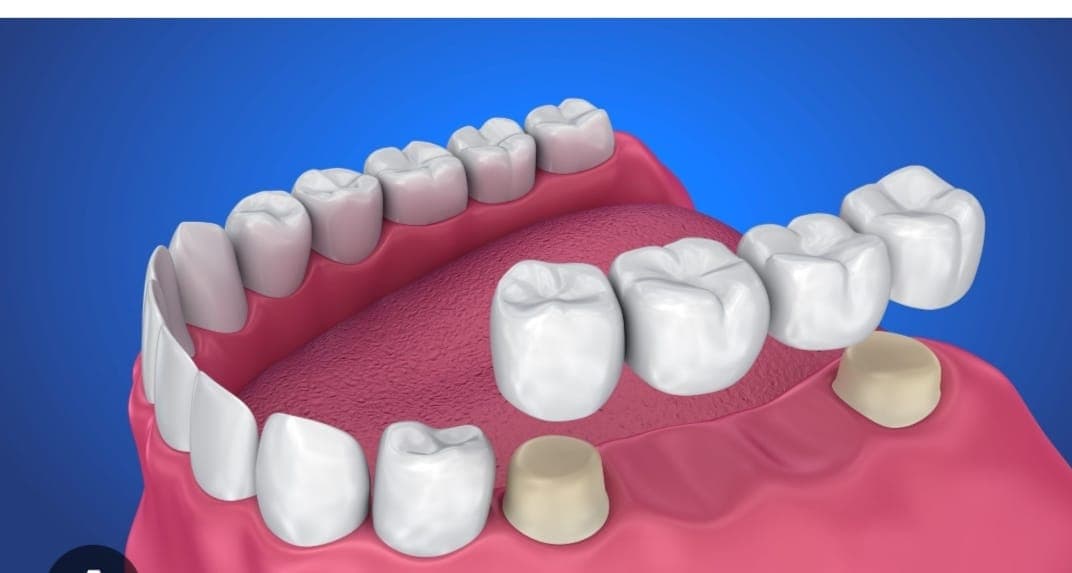
A dental bridge is a fixed dental prosthesis used to replace one or more missing teeth. It literally "bridges" the gap created by missing teeth. A bridge consists of artificial teeth known as pontics, which are supported by crowns placed on adjacent natural teeth or dental implants.
Bridges help restore chewing efficiency, maintain facial appearance, and prevent neighboring teeth from shifting into the empty space.
Components of a Dental Bridge
A typical dental bridge consists of:
Abutment Teeth
These are the natural teeth or implants that support the bridge. They are prepared to receive crowns that anchor the restoration.
Pontic
The pontic is the artificial tooth that replaces the missing tooth. It is designed to resemble a natural tooth in shape, size, and color.
Connectors
Connectors join the pontic to the retainers or crowns, creating a single functional unit.
Types of Dental Bridges
1. Traditional Bridge
This is the most common type of bridge. It consists of one or more pontics supported by crowns on adjacent teeth.
Advantages:
- Strong and reliable
- Suitable for most clinical situations
Disadvantages:
- Requires preparation of adjacent healthy teeth
2. Cantilever Bridge
A cantilever bridge is supported by only one abutment tooth.
Advantages:
- Useful when only one supporting tooth is available
Disadvantages:
- Increased stress on the supporting tooth
- Less commonly used
3. Maryland Bridge
This bridge uses a metal or ceramic framework bonded to the back surfaces of adjacent teeth rather than full crowns.
Advantages:
- Conservative tooth preparation
- Good aesthetic option
Disadvantages:
- Less durable under heavy chewing forces
4. Implant-Supported Bridge
Instead of natural teeth, dental implants support the bridge.
Advantages:
- Excellent stability
- Preserves bone structure
- Does not require preparation of adjacent teeth
Disadvantages:
- Higher cost
- Requires surgical implant placement
Procedure for Crown Placement
The crown procedure generally involves two appointments.
First Appointment
- Clinical examination and diagnosis
- Local anesthesia administration
- Tooth preparation by removing damaged portions
- Impression taking
- Shade selection
- Placement of a temporary crown
Laboratory Fabrication
The dental laboratory fabricates the custom crown according to the dentist's specifications.
Second Appointment
- Removal of temporary crown
- Evaluation of fit, shape, and color
- Cementation of the permanent crown
- Occlusal adjustment and polishing
Procedure for Bridge Placement
The bridge procedure follows a similar process.
Initial Visit
- Examination and treatment planning
- Preparation of abutment teeth
- Impression making
- Temporary bridge placement
Laboratory Stage
The bridge is fabricated based on the dental impressions.
Final Placement
- Removal of temporary restoration
- Assessment of fit and aesthetics
- Permanent cementation
- Bite adjustment
Advantages of Crowns and Bridges
Restoration of Function
Crowns and bridges restore chewing efficiency, allowing patients to eat comfortably and enjoy a wider variety of foods.
Improved Aesthetics
Modern materials closely mimic natural tooth color and translucency, resulting in an attractive smile.
Enhanced Speech
Missing or damaged teeth can affect pronunciation. Restorations help improve speech clarity.
Prevention of Tooth Movement
Bridges prevent adjacent teeth from drifting into spaces created by missing teeth.
Increased Confidence
Restoring a healthy smile often improves self-esteem and social confidence.
Long-Term Durability
With proper care, crowns and bridges can last for many years.
Indications for Crown and Bridge Treatment
Crown and bridge treatment may be indicated for:
- Extensive tooth decay
- Fractured teeth
- Worn teeth
- Root canal-treated teeth
- Missing teeth
- Cosmetic enhancement
- Replacement of old restorations
Contraindications
Treatment may not be suitable in certain cases:
- Poor oral hygiene
- Active periodontal disease
- Insufficient supporting tooth structure
- Uncontrolled systemic diseases
- Severe bruxism without protective measures
Proper patient selection is essential for long-term success.
Maintenance of Crowns and Bridges
Good oral hygiene plays a crucial role in the longevity of dental restorations.
Patients should:
- Brush twice daily using fluoride toothpaste
- Floss regularly, especially around bridge pontics
- Use interdental brushes when recommended
- Attend regular dental check-ups
- Avoid biting hard objects such as ice or pens
- Wear a night guard if grinding habits are present
Regular professional cleaning helps maintain the health of supporting teeth and gums.
Complications of Crown and Bridge Restorations
Although generally successful, complications may occur:
Crown Loosening
The cement may fail, causing the crown to become loose.
Secondary Caries
Decay can develop around crown margins if oral hygiene is inadequate.
Fracture
Porcelain chipping or crown fracture may occur under excessive force.
Gum Irritation
Poorly fitting restorations can contribute to gingival inflammation.
Sensitivity
Some patients experience temporary sensitivity following placement.
Most complications can be managed successfully through timely dental intervention.
Recent Advances in Crown and Bridge Dentistry
Modern dentistry has introduced several innovations:
CAD/CAM Technology
Computer-aided design and manufacturing allow precise digital fabrication of crowns and bridges, improving accuracy and reducing treatment time.
Digital Impressions
Digital scanners eliminate the need for conventional impression materials, increasing patient comfort.
Advanced Ceramic Materials
New ceramic systems offer improved strength, translucency, and aesthetics.
3D Printing
Three-dimensional printing technology assists in creating highly accurate dental models and restorations.
These advancements continue to improve treatment outcomes and patient satisfaction.
Conclusion
Crown and bridge dentistry plays a vital role in restoring damaged and missing teeth. Dental crowns protect and strengthen weakened teeth, while bridges replace missing teeth and restore oral function. Advances in materials, digital technology, and treatment techniques have made these restorations more durable, comfortable, and aesthetically pleasing than ever before.
When properly planned, fabricated, and maintained, crowns and bridges provide long-lasting solutions that enhance oral health, chewing ability, speech, and overall appearance. Regular dental visits and good oral hygiene are essential for ensuring the success and longevity of these restorations. As restorative dentistry continues to evolve, crowns and bridges remain fundamental treatment options for achieving functional and beautiful smiles.